Publish Date: Sun, 30 Aug 2026 (11:56 IST)
Updated Date: Sun, 30 Aug 2026 (12:03 IST)
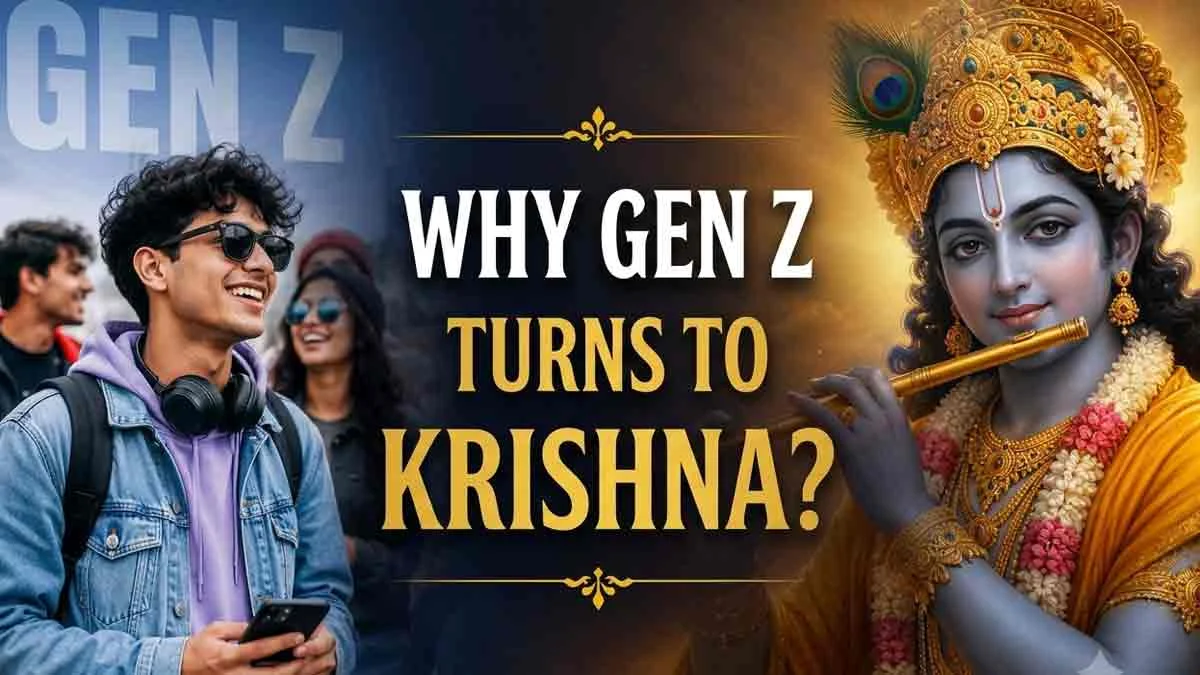
Generation Z is increasingly finding new ways to connect spirituality with modern life. Rather than following rigid rituals or traditional religious practices, many young people are exploring faith through ideas, music, community and emotional connection.
Among Hindu deities, Shri Krishna has emerged as a particularly relatable figure for Gen Z. His image as a friend, guide and philosopher resonates with a generation navigating mental-health challenges, career pressure, relationships and the complexities of modern life.
Shri Krishna: More Than a God, a Friend and Mentor
Gen Z often prefers to view spirituality through a personal and relatable lens rather than seeing God only as a strict rule-maker.
Shri Krishna's personality fits this approach naturally. In Hindu tradition, he is portrayed as a friend, companion and mentor who offers guidance during difficult situations. His conversations with Arjuna in the Bhagavad Gita present him as someone who helps people understand their dilemmas and make difficult decisions.
This image of Krishna as a guide and "sakhā" makes him especially relatable to young people looking for direction without judgment.
Bhagavad Gita and the Search for Mental Peace
Anxiety, career uncertainty, relationship struggles and overthinking are common concerns among today's youth. For many, the Bhagavad Gita offers timeless perspectives that can be applied to modern challenges.
The teaching of focusing on one's actions rather than becoming consumed by the outcome is particularly relevant to a generation dealing with academic pressure, career competition and the fear of failure.
Instead of viewing the Gita solely as a religious text, some young people approach it as a source of perspective, self-reflection and emotional resilience.
From Bhajans to Kirtan Jams
Young people's approach to devotion is also evolving. Traditional bhajans and kirtans are increasingly being presented through contemporary music and community experiences.
"Kirtan jams" and devotional music events combine traditional chants such as "Hare Krishna" and "Radhe-Radhe" with modern beats, creating an environment where participants can sing, dance and unwind.
For some youngsters, these gatherings offer an alternative form of socialising while allowing them to experience spirituality in a more relaxed and contemporary setting.
Krishna's Message of Love and Freedom
Krishna is also associated with love, music, art, joy and a celebration of life. His stories and teachings are interpreted by many devotees as emphasising love and devotion rather than fear.
This relatively open and personal approach to spirituality appeals to young people who value individuality, freedom and acceptance.
Why Gen Z Is Connecting With Khatu Shyam Ji
The connection is not limited to Krishna. Khatu Shyam Ji has also gained considerable popularity among young devotees.
The Appeal of "Hare Ka Sahara"
Young people dealing with loneliness, disappointment and uncertainty may find emotional comfort in the belief associated with Khatu Shyam Ji as "Hare Ka Sahara" — a source of support for those who feel defeated or are going through difficult times.
For devotees, this creates a sense of having a spiritual companion who listens without judgment and offers hope during challenging phases of life.
Social Media Is Expanding His Reach
Social media has played an important role in bringing devotional content to younger audiences. Instagram Reels and other short-form platforms frequently feature Khatu Shyam bhajans and devotional videos, helping introduce the tradition to audiences who may not have encountered it otherwise.
Lord Jagannath: A Symbol of Equality and Inclusivity
Lord Jagannath is another important spiritual figure who resonates with values increasingly emphasised by Gen Z, particularly equality and inclusivity.
A Tradition Built Around Equality
Jagannath culture is often associated with the idea that there should be no distinction between people based on social status. The tradition of Mahaprasad, which is shared among devotees, is seen by many as reflecting this spirit of equality.
This emphasis on togetherness and inclusivity aligns with the values of a generation that places strong importance on equality and social acceptance.
A More Human and Relatable Form of Devotion
Another distinctive aspect of Jagannath worship is the way the deity is treated in a deeply human and intimate manner. According to tradition, Lord Jagannath undergoes rituals associated with everyday human experiences — including bathing, resting and even falling ill.
The annual Rath Yatra further brings the deity into public spaces, allowing devotees to experience the divine in a vibrant and accessible way.
Why Gen Z Is Reimagining Spirituality
The growing interest among young people in Krishna, Khatu Shyam Ji and Lord Jagannath reflects a broader shift in how spirituality is being experienced.
For many in Gen Z, spirituality is less about fear or rigid rules and more about love, belonging, emotional comfort, freedom, community and equality.
Rather than abandoning tradition, young people are finding new ways to interpret and experience it — through philosophy, music, social media, festivals and personal connections with the divine.